
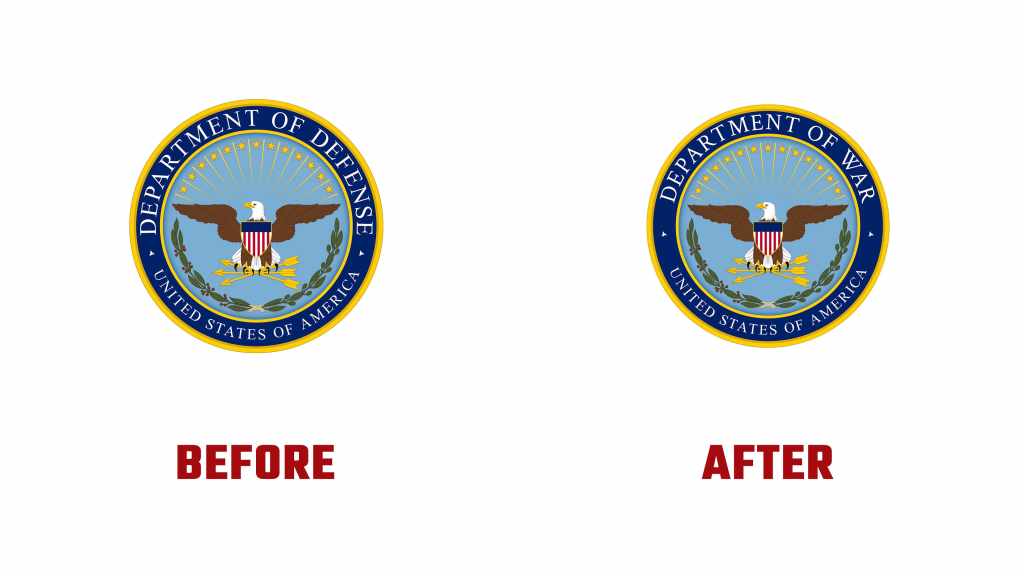
What is disorienting about the present moment is not the presence of a dramatic rupture, but the way in which everyday political life continues to appear largely unchanged, with the conditions that once gave it coherence gradually shifting beneath that appearance. The offices remain in place, the titles are still recognizable, and the institutional architecture through which political life is organized continues to present itself as stable and continuous. One still encounters the presidency, the Secretary of Defense, the Attorney General, and the broader network of offices that structure governance, and in encountering them, one is invited to assume that the functions they perform remain aligned with the expectations historically attached to them.
What becomes more difficult to locate is the relationship between these forms and the practices now carried out within them, as the individuals who occupy these roles, and the ways in which those roles are performed, increasingly operate according to logics that do not align with the institutional expectations those positions once stabilized. A presidency organized around spectacle, a defense apparatus mediated through media performance, congressional hearings structured around moments of rhetorical capture rather than the production of accountable knowledge, these do not appear as outright breaks so much as shifts in how recognizable forms are inhabited and put to use.
One way to approach this shift is through the work of Michel Foucault, for whom institutions do not simply hold authority but participate in the organization of discourse, shaping what can be said, what counts as knowledge, and how truth is produced and recognized (Foucault, 1980). The authority of an office has historically depended on its participation in relatively stable regimes of truth, within which speech, expertise, and accountability were structured in ways that rendered institutional action intelligible. What appears now takes place under conditions in which those regimes no longer stabilize in the same way, such that speech continues, testimony is still given, and institutional procedures remain in operation, and the relation between these practices and the production of truth becomes more difficult to secure.
A similar reorganization can be observed in contemporary journalism, where moments that would traditionally be oriented toward documenting events are increasingly structured around the observer’s positioning within those events. During the 2026 White House Correspondents’ Dinner shooting, for example, coverage in its immediate aftermath included instances in which journalists, rather than directing their cameras toward the unfolding event, turned them toward themselves, documenting their own reactions and presence within the scene. What circulated in those moments included both the event and the experience of being situated within it, with documentation increasingly intertwined with performance under conditions that reward visibility, immediacy, and personal positioning.
This pattern extends into the university, where the institutional form remains in place, and the field of inquiry is gradually reconfigured through more explicit and more subtle mechanisms. Research continues, courses are taught, and degrees are conferred, yet the range of questions that can be taken up, the manner in which they can be approached, and the conclusions that can be sustained begin to shift in response to changing political and institutional conditions. In a number of U.S. contexts, including state-level interventions affecting public universities such as Texas Tech University and others, formal prohibitions have been placed on the teaching, research, and discussion of topics related to race, gender, and sexuality, such that certain lines of inquiry become more difficult to pursue and the space of what can be articulated narrows unevenly over time.
In a related way, agencies tasked with producing and stabilizing public knowledge in areas such as public health, policy, and science continue to operate under recognizable forms of authority while encountering increasing difficulty in stabilizing the status of the knowledge they produce. Organizations such as the Centers for Disease Control and Prevention continue to conduct research, issue guidance, and provide data, yet their outputs circulate within environments shaped by political contestation, media amplification, and shifting public expectations, such that the relationship between expertise, institutional authority, and public recognition becomes more variable.
At the same time, the structure of political and media discourse itself undergoes a parallel shift, as cable news and related media forms increasingly organize content around pre-structured interpretive frames that guide viewers toward particular understandings of events, and as political language operates through euphemisms that maintain the appearance of continuity while altering the substance of what is being enacted. Terms such as “election security,” “protecting women,” or references to ideas that “divide Americans” circulate within discursive fields that delimit what can be said and how it can be heard, such that language continues to function, and its relation to what it designates becomes more mediated and more difficult to fix.
This shift extends even into the publicly facing communications of government institutions themselves, where the transformation becomes difficult to ignore. Official accounts that once served as relatively stable channels for disseminating information now participate in the same logics of circulation, visibility, and affect that structure broader media environments. Under the Trump regime, government pages increasingly serve as sites of stylized messaging, incorporating elements more commonly associated with entertainment media, including AI-generated imagery, meme formats, and highly produced “hype” content. One encounters immigration enforcement agencies producing videos that frame arrests through the aesthetics of spectacle, while official White House channels circulate content that blends political messaging with digitally manipulated imagery designed to provoke reaction, with the institutional form remaining intact and the communicative practices operating within it undergoing reorganization.
Taken together, these developments can be understood through Foucault’s concept of the apparatus, which he describes as a “heterogeneous ensemble of discourses, institutions, laws, administrative measures, and forms of knowledge, as well as the relations established between them” (Foucault, 1980). The apparatus does not reside in any single institution but emerges through the alignment of multiple elements that together organize the production and circulation of truth. Political institutions, journalism, universities, public health agencies, and media discourse do not operate independently but form an interconnected field in which changes in one domain reverberate across others, such that journalistic framing shapes how scientific findings are received, political discourse reorients how institutional authority is interpreted, academic constraints feed back into what can be publicly articulated as knowledge, and media environments restructure how all of these elements circulate and acquire legitimacy.
Across these domains, one can trace the consolidation of practices that reorganize how truth is produced, circulated, and recognized, as shifts that may once have appeared uneven or isolated begin to operate in coordination within and across institutional settings.
All of these examples point to an accelerating process of institutional attrition, in which the background conditions that once stabilized political life are unsettled as regimes of truth are reorganized within institutions that continue to carry their historical authority. This process does not involve the disappearance of institutions so much as a shift in how they produce, organize, and authorize truth within an apparatus whose internal relations have been reconfigured.
The emergence and solidification of the Trumpian truth regime can be understood in Foucauldian terms as an effect of the historical a priori, emerging from the specific conditions that render it possible, rather than as the origin of the transformations described here. The present state of affairs does not begin or end with Trump, but takes shape within a horizon structured by prior configurations of power, knowledge, and institutional practice. Thus, the conditions that precede the Trump regime are what allow it to unfold as it has, as historical forces preconfigure the moment in which the regime arises and shape the circumstances through which it takes form, while the political apparatus itself shifts through the arrangements of power that are now permitted to operate across institutions in a more aligned and coordinated way.
The effects of this shift are not confined to institutions but extend into the texture of everyday experience, where ordinary life depends on a background that can remain implicit, allowing situations to carry their meaning without requiring constant interpretation. As that background becomes less stable, more experience must be actively interpreted, so that situations that once held together without effort begin to feel contingent and open in ways that demand attention. This does not necessarily register as a disruption at the level of activity, as work continues, relationships are maintained, and daily routines persist; however, the sense that these activities cohere into an intelligible whole becomes more difficult to sustain.
What emerges under these conditions is a persistent misalignment between what is recognized and what can be reliably interpreted, as familiar forms continue to structure experience and the relations that once held those forms together as a coherent world become less secure. This is the condition within which people now find themselves.
To recognize this condition is not to resolve it, nor to step outside of it, but to become more precise about the terms under which one is living and acting within it. The difficulty is not located in any single institution, nor in any single figure, but in the reorganization of the relations that allow institutions, discourse, and experience to hold together in the first place. What follows from this is not a program or a solution, but a form of attention, one that remains oriented to how these arrangements operate, how they take hold, and how they are reproduced across domains. It is only through this recognition that we can open up new terrains and practices that might help us move beyond the current set of conditions.
References
Foucault, M. (1972). The Archaeology of Knowledge.
Foucault, M. (1980). Power/Knowledge: Selected Interviews and Other Writings.
Foucault, M. (2007). Security, Territory, Population.

